

Pantheon: Cphere's Unified Intelligence Network for Agentic Ad Infrastructure
Updated: Jul 16

Artificial intelligence is moving beyond simple prompts and isolated assistants.
The next shift is agentic infrastructure: connected systems of specialized AI agents that can support planning, analysis, recommendations, readiness checks, campaign workflows, and eventually governed decision execution.
For advertising, this matters.
Modern media operations are already complex. Teams manage audiences, budgets, creative assets, platforms, optimizations, reporting, compliance, approvals, and performance signals across an expanding digital ecosystem. AI can help simplify that complexity, but only if the system is visible, structured, and controlled. That is why Cphere is building Pantheon.
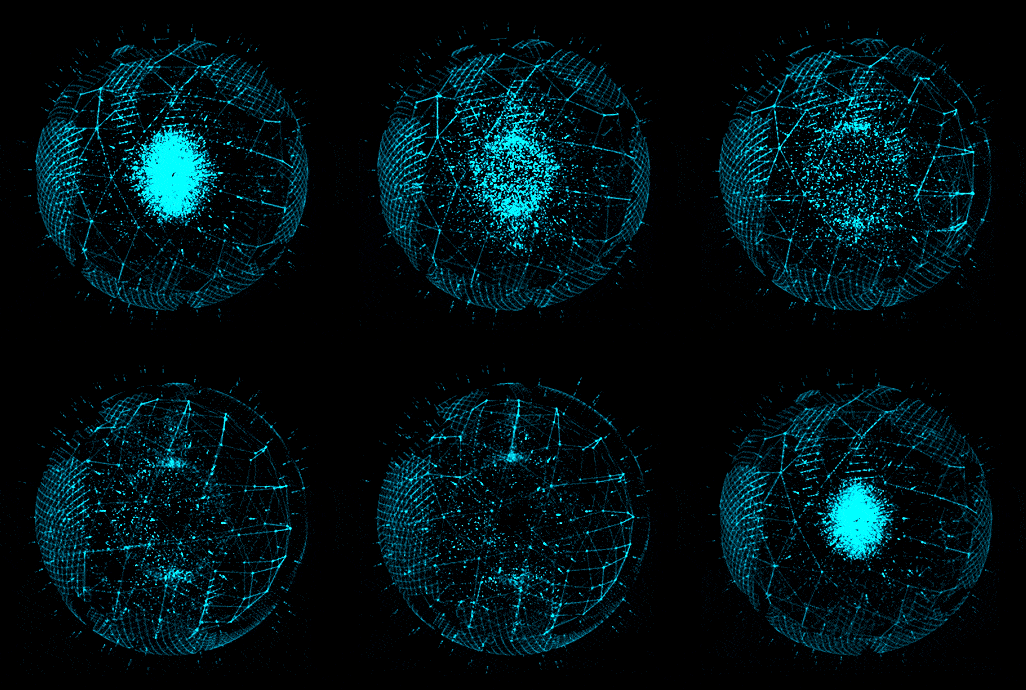
It is designed to observe the agentic network, surface readiness signals, support structured intelligence, and help build trust before decisions move toward execution.
In simple terms:
Eden interacts with the network.
Sherloc understands the network.
Pantheon observes the network and helps teams trust it.
Why Pantheon Exists
Most AI products focus on what the model produces.
A response.
A recommendation.
A media plan.
A performance summary.
An optimization suggestion.
But in operational environments, output is only part of the question.
The more important questions are:
Which system produced the recommendation?
What role was it operating under?
Was the right data available?
Was the agent in the correct lifecycle state?
Was the recommendation simulated, reviewed, or approved?
Is the system ready for action, or should it remain in observation mode?
As AI becomes more deeply connected to business workflows, teams need visibility into the infrastructure behind the intelligence. Pantheon exists to provide that visibility.
It is not positioned as uncontrolled autonomy. It is not about AI acting without oversight. It is about building the observation layer required before deeper agentic capabilities can be trusted.

From Human-in-the-Loop to Policy-in-the-Loop
For years, responsible AI has been framed around a simple idea: keep a human in the loop.
That principle still matters.
Human judgment, review, and accountability remain essential, especially in areas like advertising where decisions can affect budgets, audiences, creative direction, brand safety, and business outcomes. But as agentic systems become more capable, human-in-the-loop alone is not enough to scale.
A person cannot manually inspect every signal, every recommendation, every readiness state, every permission boundary, and every proposed workflow across a growing network of specialized AI agents. If every decision depends only on manual intervention, the system may be safe, but it will not be streamlined.
The next evolution is policy-in-the-loop.
Policy-in-the-loop does not remove human oversight. It strengthens it by embedding rules, permissions, readiness checks, approval paths, and governance boundaries directly into the operating layer.
Instead of relying only on humans to catch issues at the end, the system is designed to surface what matters earlier: what an agent is allowed to do, what state it is in, whether a recommendation is ready, and whether a workflow should remain in observation, move into simulation, or require human approval.
That is one of the reasons we built Pantheon.
Pantheon is designed to help Cphere observe the agentic network before deeper autonomy is introduced. It gives structure to the agents, their lifecycle states, their authority boundaries, and their readiness signals.
In that sense, Pantheon is not a replacement for human judgment.
It is infrastructure that helps human judgment scale.
The goal is not uncontrolled automation. The goal is governed intelligence: a system where people remain accountable, while policies, observability, and readiness signals help streamline operations responsibly.
Observation Before Execution
Cphere’s approach to agentic AI is intentionally measured. We believe intelligence should come before automation, and observation should come before execution.
Before AI agents are trusted with operational decisions, the system should be able to show what agents exist, what they are designed to do, what state they are in, what permissions they may eventually require, and whether a workflow is ready to move forward. Pantheon is part of that foundation.
It gives Cphere a way to organize and observe the agentic network: the specialized components that may support strategy, audience intelligence, creative review, media planning, optimization, governance, and readiness.
Over time, this foundation can support more advanced capabilities, including controlled simulations, test-run decision paths, readiness evaluations, and governed execution workflows.
But the starting point is clear:
First, observe the network.
Then, understand the network.
Then, trust the network.
The Cphere Agentic Architecture
Cphere is not simply adding AI features onto an advertising platform. We are building toward a more structured agentic operating model. That model includes multiple layers of intelligence, each with a different responsibility.
Eden is the interaction layer. It helps users communicate with Cphere, initiate workflows, ask questions, and move through complex tasks more naturally.
Sherloc is the understanding layer. It helps analyze campaign performance, interpret signals, surface insights, and make sense of what is happening across media and business activity.
Pantheon is the observation and trust layer. It provides visibility into the agentic network itself, helping teams understand agent roles, states, readiness, and the broader architecture supporting intelligent operations.
Together, these systems represent a larger philosophy:

Built Carefully, Branded Intentionally
Pantheon is also a reflection of how Cphere thinks about product architecture. We believe agentic systems need clear names, clear roles, and clear boundaries. That is why Pantheon is not just a technical layer hidden behind the scenes. It is a branded component of the Cphere operating model.
It gives shape to something important: the intelligence network behind the platform.
As Cphere continues to evolve, Pantheon will serve as a foundation for deeper observability, readiness testing, and governed intelligence across the agentic ad infrastructure.
This is not a promise of unchecked automation. It is a commitment to building the right architecture before autonomy becomes operationally meaningful.
The Future Is Governed Intelligence
The next era of AI in advertising will require more than powerful models. It will require systems that can explain their structure, expose their activity, separate recommendation from execution, and give teams confidence before decisions are advanced. That is the future Cphere is building toward. Pantheon is a step in that direction.
An intelligence layer.
An observation component.
A trust foundation.
An evolved architecture for agentic advertising operations.
Observe the network. Understand agent readiness. Build trust before execution.


Comments